Introduction
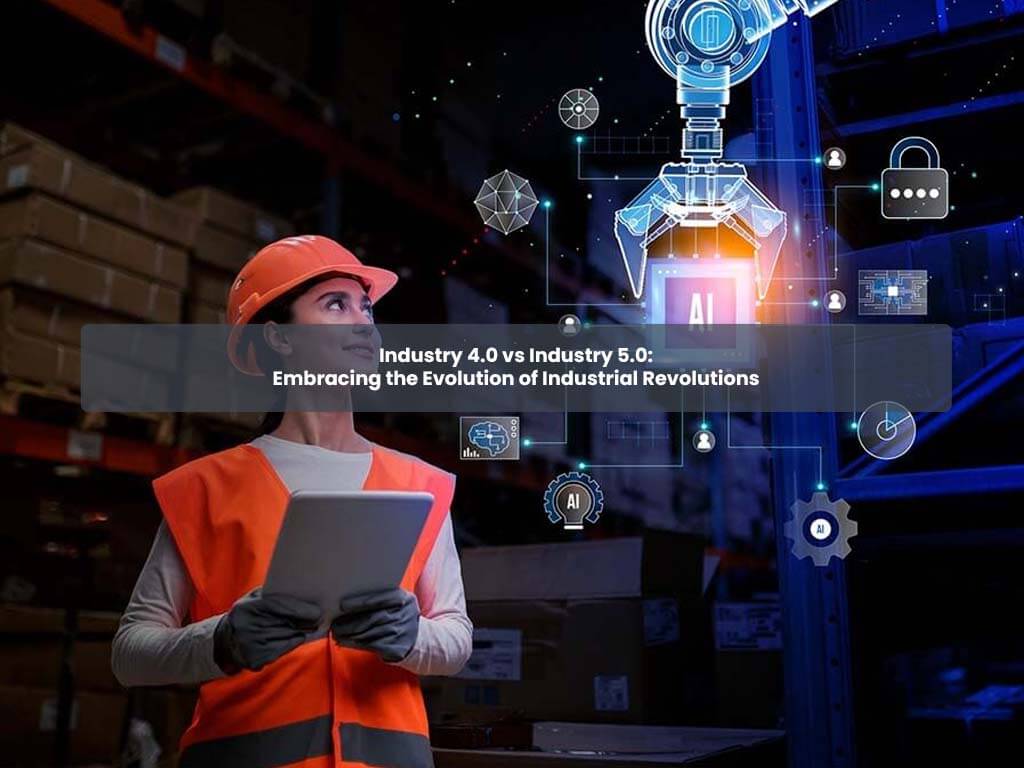
Throughout history, our world has witnessed several industrial revolutions that have revolutionized our lives and the way we work. From the advent of machinery to the rise of automation, each revolution has brought significant technological advancements and reshaped entire industries. Today, we stand at the cusp of a new era with Industry 4.0 and the forthcoming Industry 5.0. In this article, we will explore the key features and emerging trends of both industrial revolutions, shedding light on their transformative potential.
Industry 4.0: The Fourth Industrial Revolution
Industry 4.0, also known as the Fourth Industrial Revolution, represents the ongoing wave of technological progress in the manufacturing and industrial sectors. It is characterized by the integration of digital technologies into physical systems, giving rise to cyber-physical systems (CPS). Let’s delve into the essential features and trends associated with Industry 4.0:
- Interconnectivity and Internet of Things (IoT): Industry 4.0 thrives on the interconnectedness of devices and machines through the Internet of Things. This connectivity enables real-time data exchange, remote monitoring, and seamless communication among various components of the production process.
- Big Data and Analytics: The vast amount of data generated by interconnected devices in Industry 4.0 presents new opportunities for analysis and predictive modeling. Advanced analytics and machine learning algorithms enable data-driven decision-making, process optimization, and enhanced productivity.
- Automation and Robotics: Automation and robotics play a pivotal role in Industry 4.0, streamlining manufacturing processes. Collaborative robots, or cobots, work alongside human operators, boosting efficiency, safety, and precision.
- Augmented Reality (AR) and Virtual Reality (VR): AR and VR technologies find applications in Industry 4.0, providing immersive training experiences, remote assistance, and virtual simulations for design, testing, and maintenance.
- Cybersecurity: With increased connectivity and data exchange, Industry 4.0 brings forth new cybersecurity challenges. Robust security measures and protocols are essential to safeguard sensitive data, infrastructure, and intellectual property.
Industry 5.0: The Fifth Industrial Revolution
Industry 5.0 represents a new paradigm that combines advanced technologies with the unique capabilities of human workers. It emphasizes collaboration between humans and machines, fostering a more human-centric approach to industrial processes. Here are the key features and emerging trends associated with Industry 5.0:
- Human-Machine Collaboration: Industry 5.0 leverages the strengths of humans and machines, focusing on tasks that require creativity, problem-solving, and emotional intelligence. This collaboration leads to the creation of new job roles and opportunities.
- Decentralized Decision-Making: Industry 5.0 promotes decentralized decision-making, empowering workers on the shop floor to make autonomous decisions based on real-time data and contextual information. This enhances agility, flexibility, and responsiveness in the production process.
- Personalization and Customization: Industry 5.0 shifts the focus towards personalized and customized products to meet individual customer needs. Technologies like additive manufacturing (3D printing) enable rapid prototyping and small-batch production, allowing for greater product diversity.
- Sustainable Manufacturing: Industry 5.0 places a strong emphasis on sustainability and environmentally friendly practices. Technologies such as renewable energy systems, resource-efficient production processes, and circular economy principles are integrated to minimize the environmental impact of industrial operations.
- Lifelong Learning and Reskilling: With Industry 5.0 introducing new technologies and job roles, continuous learning and reskilling become crucial. Organizations and individuals must embrace a culture of lifelong learning to adapt to the changing demands of the industry.
Conclusion
The transition from Industry 4.0 to Industry 5.0 marks a significant evolution in the way industries operate, blending the strengths of humans and machines to create more efficient, sustainable, and human-centric manufacturing processes. While Industry 4.0 laid the foundation for automation and digitalization, Industry 5.0 builds upon these advancements by emphasizing collaboration, personalization, and decentralized decision-making. As we embark on this new era of industrial revolution, organizations and individuals need to embrace the transformative potential of Industry 5.0 and proactively adapt to its emerging trends.
By embracing these new technologies and approaches, we can shape a future where technology empowers us to achieve greater productivity, sustainability, and well-being in the industrial landscape. The journey from Industry 4.0 to Industry 5.0 holds immense promise, and it is up to us to harness its potential for the benefit of society as a whole.