Introduction
In the fast-paced world of industrial development, the emergence of Industry 4.0 and the promising prospects of Industry 5.0 have sparked a paradigm shift that transcends traditional manufacturing processes. These advancements have revolutionized the industrial landscape, introducing automation, artificial intelligence, and the Internet of Things (IoT) into the core of production systems. While these technological leaps hold immense potential for efficiency and productivity, it is crucial to strike a delicate balance between the human element and the ever-evolving technology. In this article, we delve into the significance of harmonizing human ingenuity with technological advancements in Industry 4.0 and Industry 5.0.
Industry 4.0: The Rise of Automation and Connectivity
Industry 4.0 encompasses the integration of cyber-physical systems, cloud computing, and the IoT to create “smart factories.” These digitally connected systems enable real-time data exchange, seamless collaboration, and automation of various processes. The benefits of Industry 4.0 are undeniable, as it enhances productivity, improves quality, and reduces costs. However, it is crucial to recognize that technology alone cannot achieve optimal outcomes without human intervention.
The Human Touch: Leveraging Human Creativity and Adaptability
While automation and advanced technologies streamline operations, human creativity, critical thinking, and adaptability remain unparalleled. In Industry 4.0, humans play a pivotal role in decision-making, complex problem-solving, and innovation. Employees are now required to upskill and reskill to complement the evolving technological landscape. The ability to leverage technology while maintaining a human touch is paramount for sustainable success.
Upskilling and Reskilling: Empowering the Workforce
To bridge the gap between human capabilities and technological advancements, organizations must invest in upskilling and reskilling their workforce. Continuous learning programs, training initiatives, and professional development opportunities empower employees to acquire new competencies and understand the intricacies of emerging technologies. This proactive approach ensures that workers remain relevant and adaptable in an ever-changing industrial landscape.
Industry 5.0: Human-Centric Approach to Technological Advancement
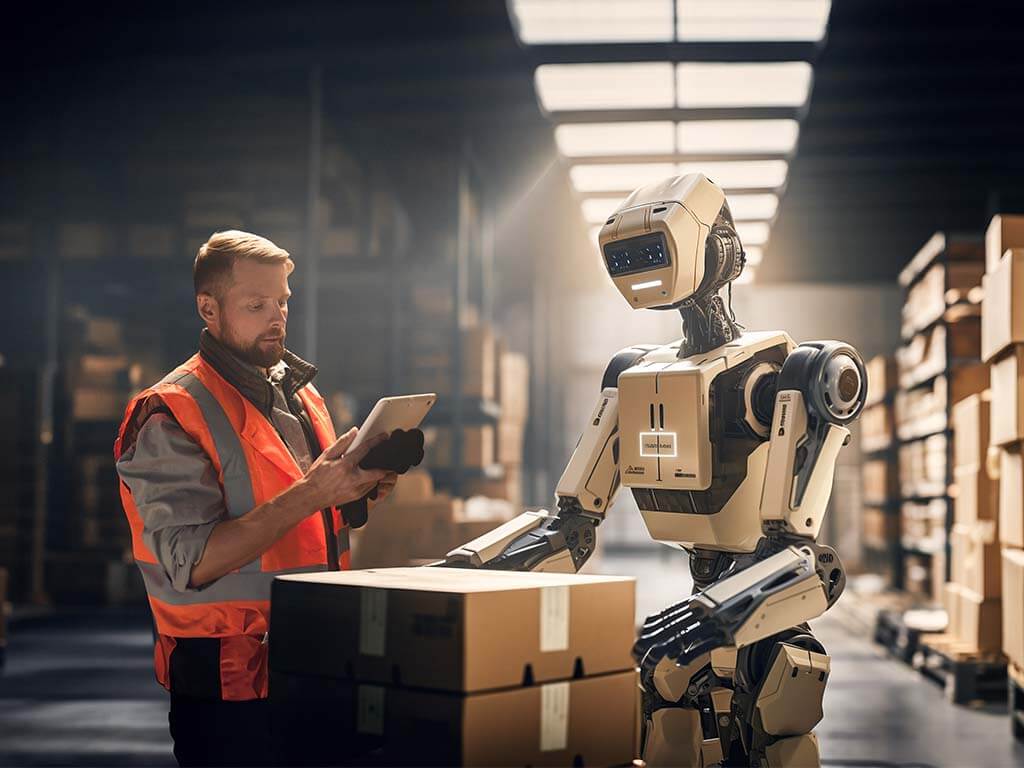
Industry 5.0 takes the concept of human-technology synergy to the next level by emphasizing collaboration and cooperation between humans and machines. This approach aims to foster a harmonious working environment where automation, robotics, and artificial intelligence augment human capabilities, rather than replace them. Industry 5.0 envisions a future where workers and intelligent machines work side by side, collaborating in real-time to solve complex problems and drive innovation.
Ethical Considerations: Ensuring Transparency and Trust
As we embrace the era of Industry 4.0 and Industry 5.0, ethical considerations should remain at the forefront. Transparency, privacy, and data security are critical aspects that need careful attention. Organizations must establish clear guidelines and regulations to protect the rights of workers, consumers, and society as a whole. Building trust among stakeholders is crucial to harness the full potential of these transformative industrial revolutions.
Conclusion
The convergence of human ingenuity and technological advancements in Industry 4.0 and Industry 5.0 holds tremendous promise for industrial development. Balancing the human element with automation and connectivity is key to unlocking the full potential of these revolutions. By empowering the workforce through upskilling and reskilling initiatives, and fostering a human-centric approach in Industry 5.0, we can create an environment where technology and human capabilities complement and amplify each other. As we move forward, let us strive to build a future that embraces the best of both worlds, where human potential and technological advancements intertwine, shaping a prosperous and sustainable industrial landscape.
References and Resources:
Books:
“The Fourth Industrial Revolution” by Klaus Schwab
“Industry 4.0: The Industrial Internet of Things” by Alasdair Gilchrist
“Industry 5.0: The Future of Manufacturing” by Kelly Marchese
Research Papers and Reports:
World Economic Forum: “The Future of Jobs” report
McKinsey & Company: “The Internet of Things: Mapping the Value Beyond the Hype” report
Deloitte: “Industry 4.0: Building the Digital Enterprise” report
Online Articles and Publications:
“Industry 4.0: The Future of Manufacturing” by Forbes
“Industry 5.0: How Human-Centric Innovation Will Shape the Future of Manufacturing” by MIT Sloan Management Review
“The Role of Humans in Industry 4.0” by Harvard Business Review
“Upskilling the Workforce for Industry 4.0” by Deloitte Insights
Academic and Research Institutions:
Massachusetts Institute of Technology (MIT) Industrial Internet of Things (IIoT) Research
Fraunhofer Society’s Industry 4.0 Competence Center
World Economic Forum’s Centre for the Fourth Industrial Revolution
Official Websites:
World Economic Forum: www.weforum.org
National Institute of Standards and Technology (NIST): www.nist.gov/programs-projects/industry-40