Introduction
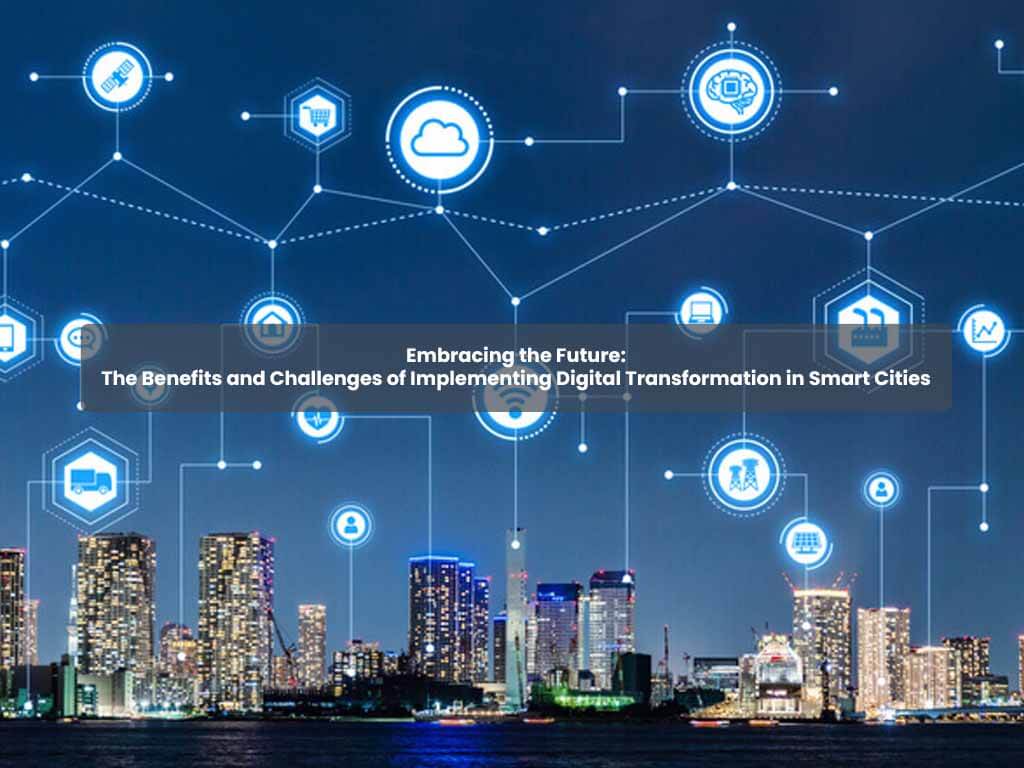
As the world continues to evolve in the digital age, the concept of smart cities has gained significant traction. These innovative urban spaces leverage advanced technologies to enhance the quality of life for residents and streamline various aspects of city management. At the heart of this transformation lies digitalization, empowering cities to become more efficient, sustainable, and connected. In this blog post, we will explore the benefits and challenges of implementing digital transformation in smart cities.
Benefits of Digital Transformation in Smart Cities
1. Improved Quality of Life:
Digital transformation in smart cities brings numerous advantages that directly impact residents’ daily lives. By integrating technology into various sectors, such as transportation, healthcare, and public safety, cities can offer enhanced services and improve overall citizen well-being. For instance, real-time data collection and analysis enable optimized traffic management, reducing congestion and commute times. Smart healthcare systems facilitate remote patient monitoring, enabling personalized care and reducing hospital visits.
2. Enhanced Sustainability:
One of the primary goals of smart cities is to achieve sustainable development. Through digital transformation, cities can optimize resource utilization, reduce waste, and minimize their ecological footprint. Smart energy grids, for example, enable efficient distribution and consumption of electricity, leading to reduced energy waste and lower carbon emissions. Additionally, sensor-based waste management systems optimize garbage collection routes, reducing fuel consumption and promoting recycling.
3. Efficient City Management:
Digital technologies enable streamlined city management processes, leading to increased efficiency and cost savings. Smart city platforms integrate data from various sources, providing real-time insights for decision-making. This empowers city officials to proactively address issues such as traffic congestion, crime prevention, and infrastructure maintenance. Predictive analytics and machine learning algorithms can help anticipate and mitigate potential problems, resulting in more efficient resource allocation and improved public services.
Challenges of Implementing Digital Transformation in Smart Cities
1. Infrastructure Requirements:
Implementing digital transformation in a city necessitates a robust and reliable technological infrastructure. The deployment of sensors, networks, and data centers requires significant investments and coordination among multiple stakeholders. Ensuring seamless connectivity across the entire city can be complex, particularly in areas with existing infrastructure limitations. Overcoming these challenges requires careful planning, collaboration, and long-term investments.
2. Privacy and Security Concerns:
Digital transformation in smart cities involves collecting and analyzing vast amounts of data from various sources. This raises concerns about privacy and cybersecurity. Safeguarding sensitive citizen information and ensuring secure data transmission and storage are critical. City authorities must implement robust security measures, establish clear data governance frameworks, and prioritize citizen privacy to foster trust and confidence in smart city initiatives.
3. Digital Divide:
While digital transformation promises to empower all citizens, it is essential to address the potential digital divide that may arise. Not everyone has equal access to technology or the skills required to fully participate in the digital ecosystem. Ensuring inclusivity and accessibility should be a fundamental consideration throughout the transformation process. Governments and urban planners must prioritize digital literacy programs and invest in bridging the digital divide to ensure equitable access to smart city benefits.
Conclusion
Digital transformation in smart cities holds immense potential for revolutionizing urban living. By integrating advanced technologies, cities can enhance quality of life, promote sustainability, and optimize resource management. However, successful implementation requires addressing challenges such as infrastructure requirements, privacy and security concerns, and the digital divide. With careful planning, collaboration, and a citizen-centric approach, cities can leverage digital transformation to create more efficient, sustainable, and inclusive urban environments for their residents. As we continue to embrace the future, smart cities will undoubtedly play a pivotal role in shaping the world we live in.